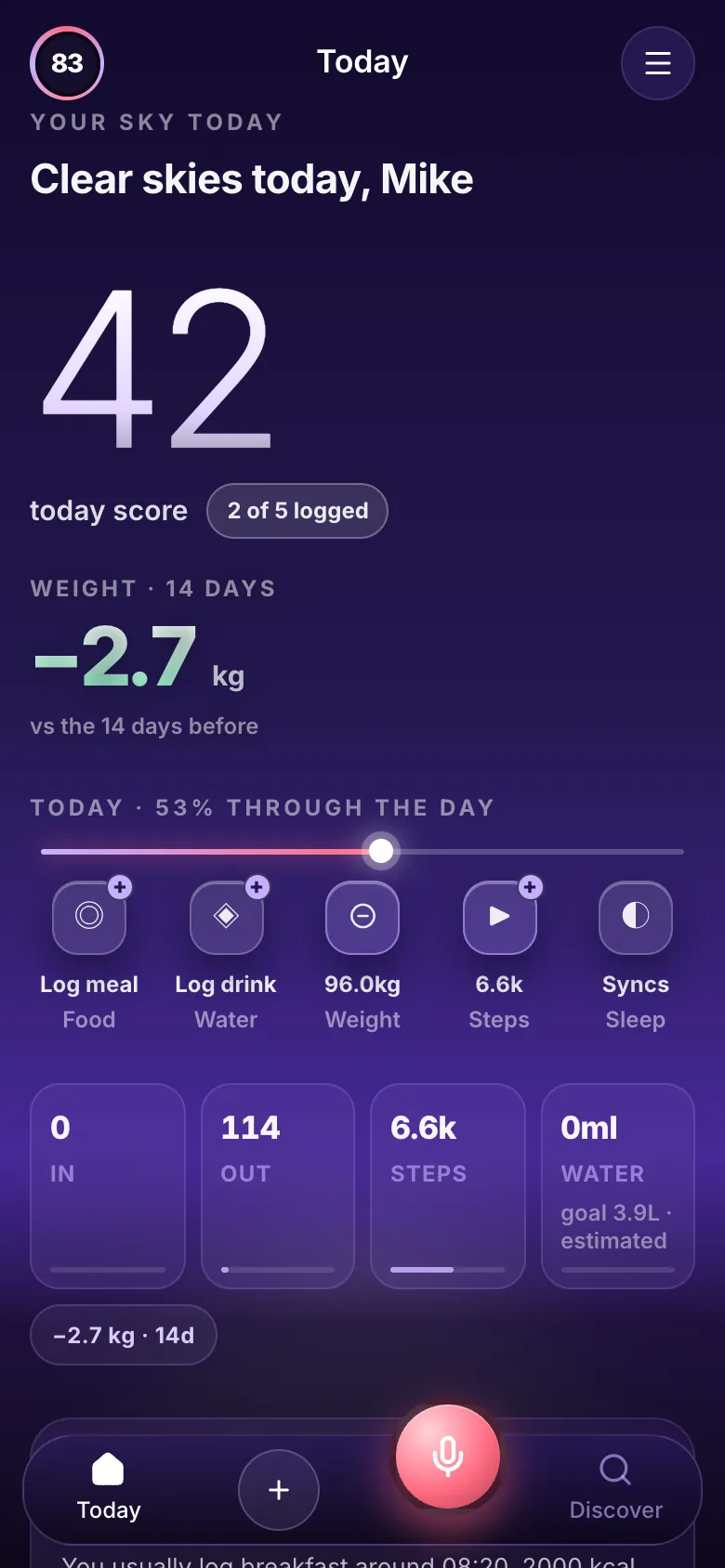
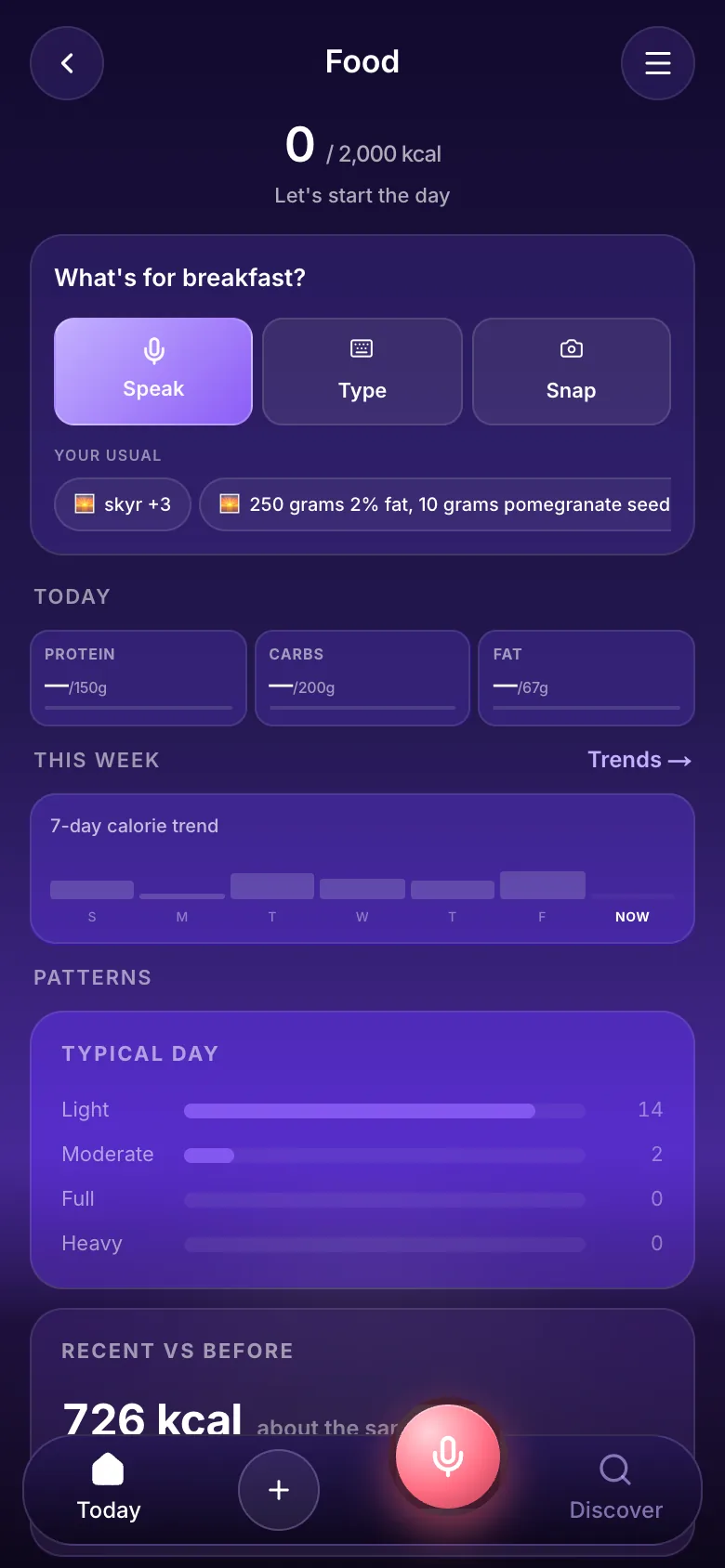
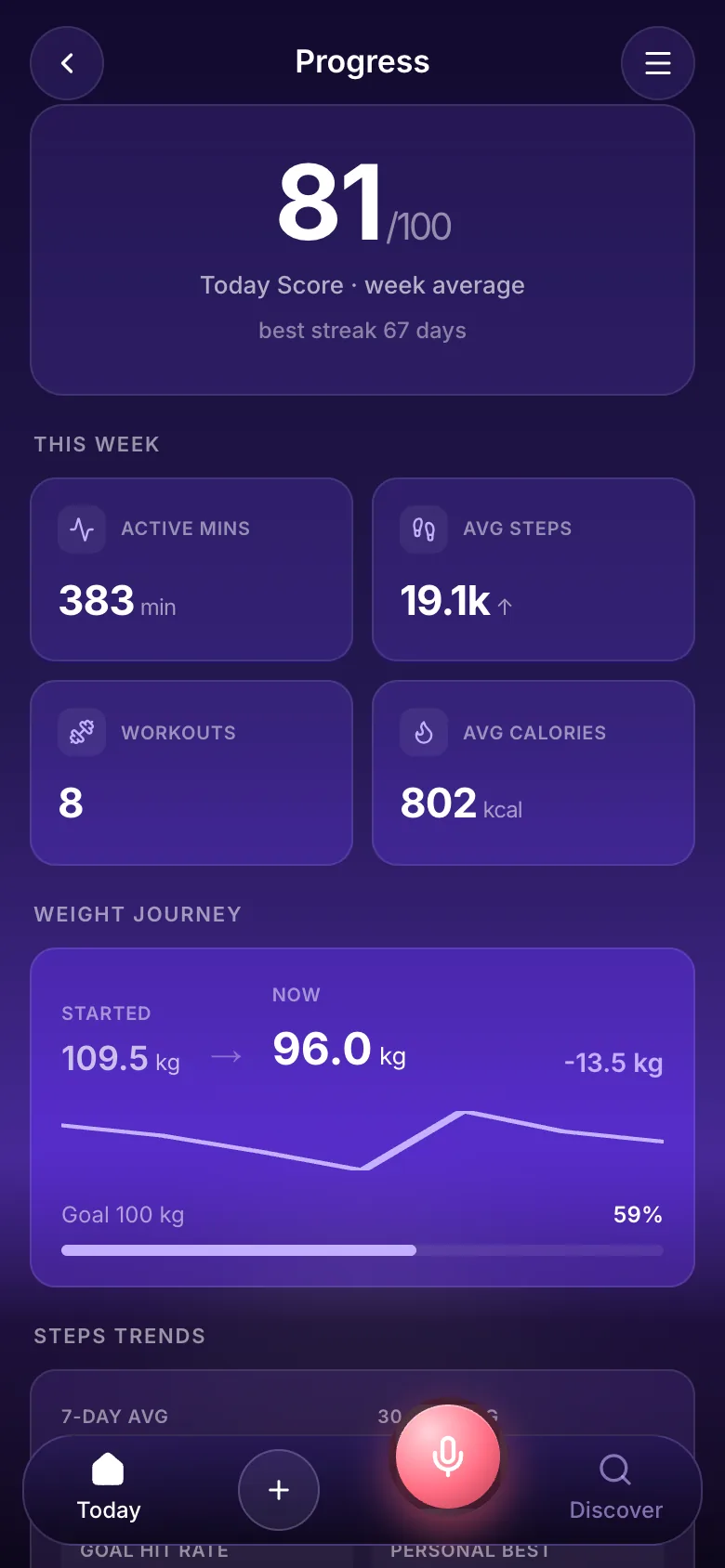
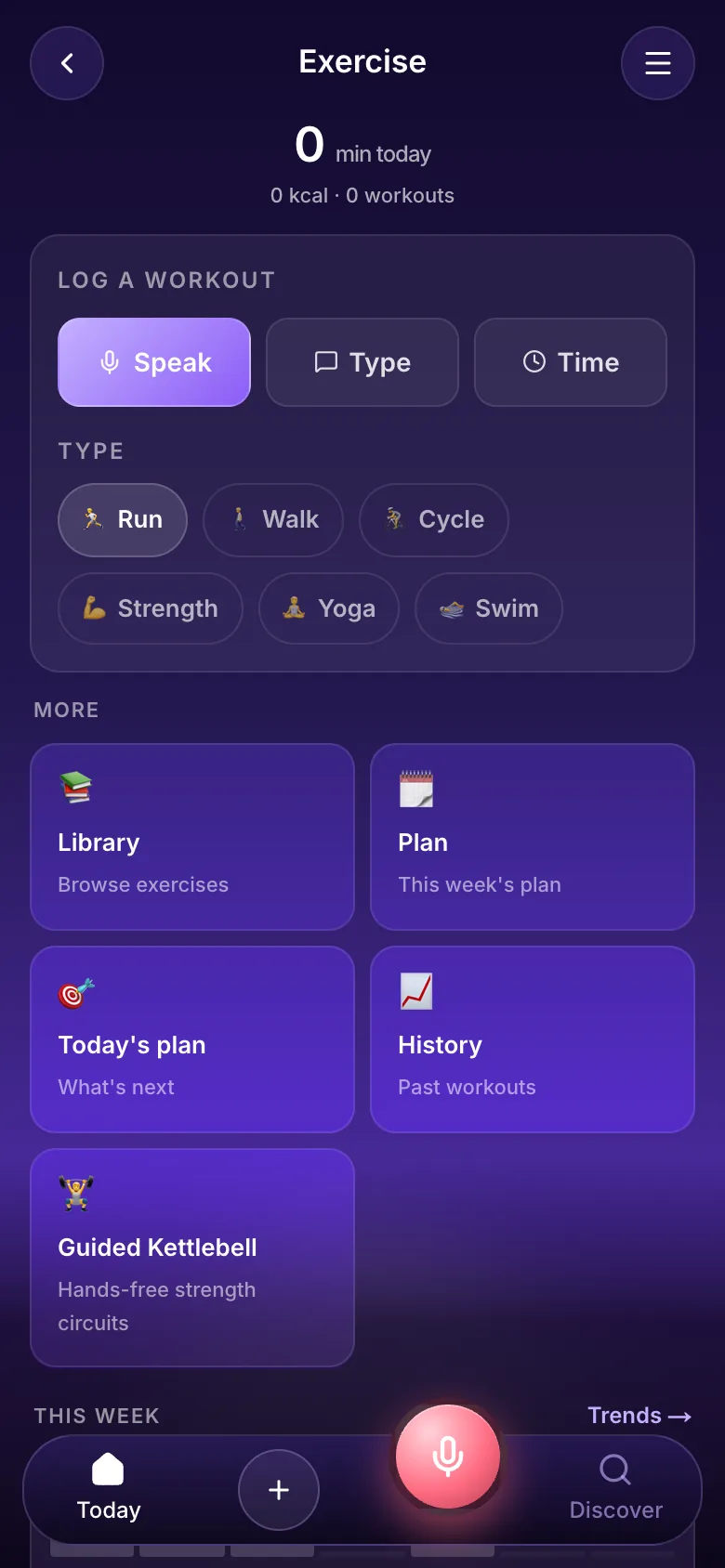
Two questions when you wake up. tr8ck handles the rest — and tells you exactly which meals, workouts, and habits are wrecking your nights.
Oura told you your HRV is "low." Whoop said your recovery is 47%. Apple Watch drew you a graph.
None of them told you it's because you eat dinner at 9pm.
No charts you have to Google. No "your REM is suboptimal." Just one sentence telling you what to fix tonight.
What time you went to bed. How rested you feel (1–10). Done. Ten seconds, no buttons to find.

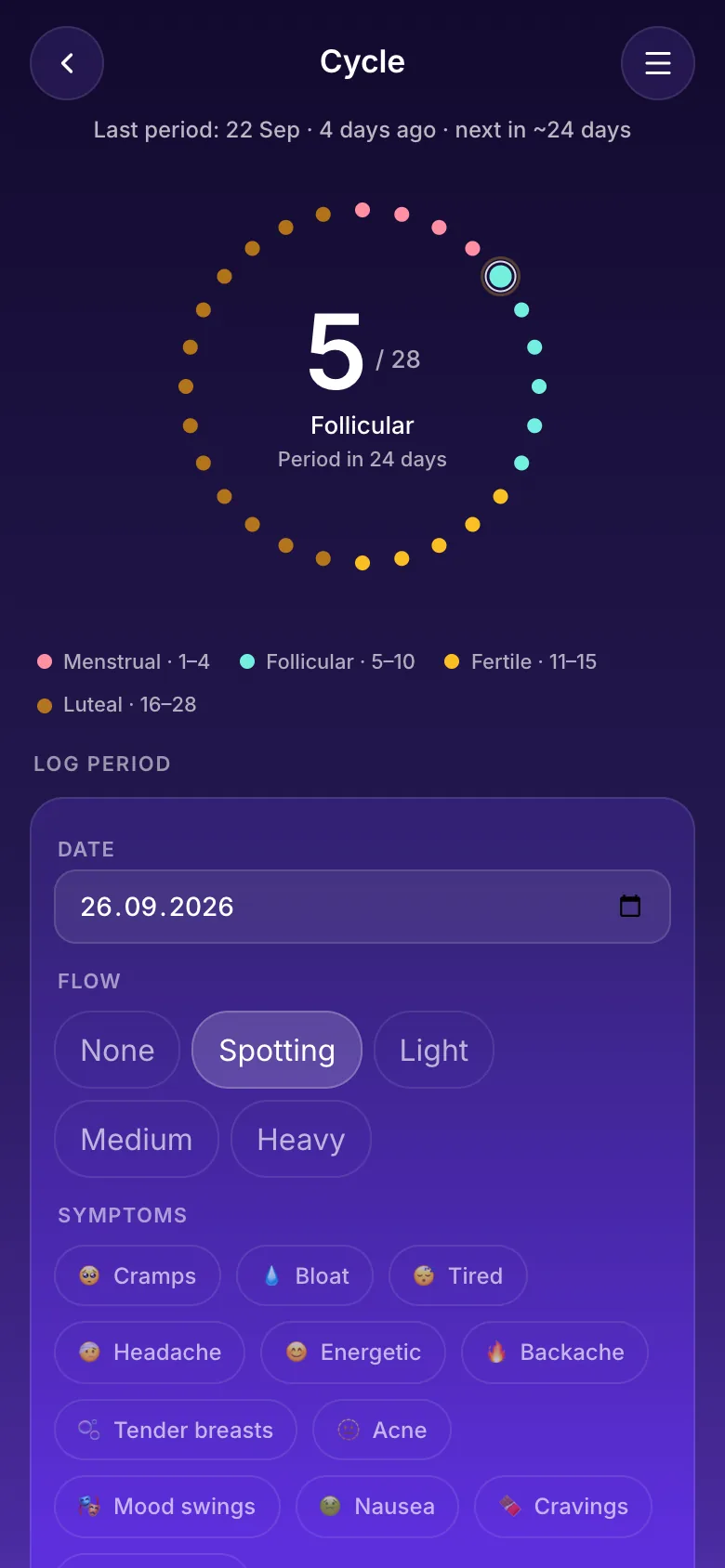
Your dinner. Your training. Your last coffee. Your mood. Your cycle. tr8ck looks at everything that could've moved the needle.

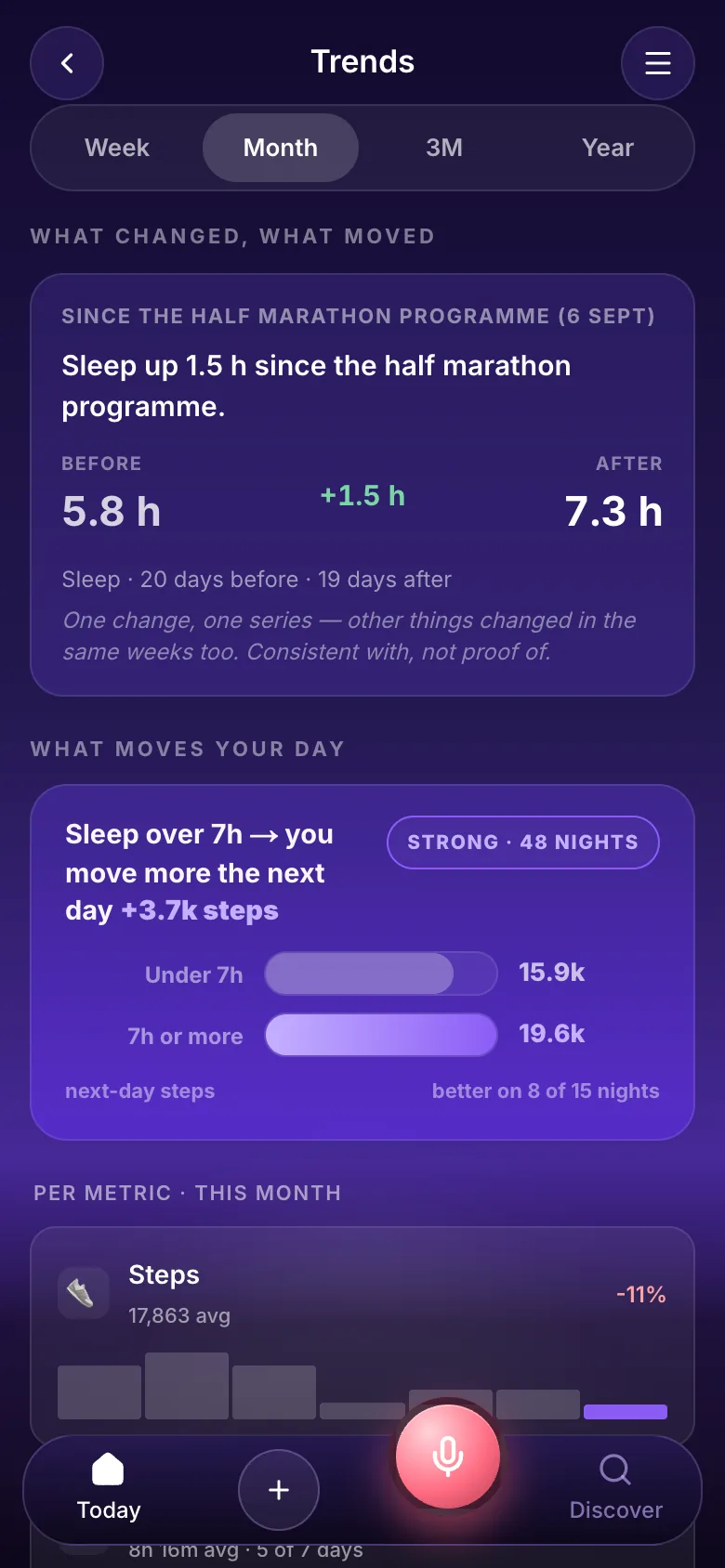
"You sleep 45 minutes less when you eat after 8pm." That's it. Now you know what to change tonight.

Forget HRV percentiles. Forget recovery scores. Here's what tr8ck Sleep actually does for you.

How rested you feel — not how much your wrist moved. tr8ck weights your input with what you ate, drank and trained the day before.

tr8ck flags the specific meals, drinks, and timings that wreck your nights. By name. Not "consider eating earlier."

tr8ck shows when training helps you sleep deeper — and when it's the reason you're wired at 1am.

"Your mood drops on under-6h nights." That number is your motivation. Stick it on the fridge.

Most apps don't even ask. tr8ck adapts your sleep recommendations to where you are in your cycle.

tr8ck tracks sleep across dose changes — so you can see when it's the medication, and when it normalizes (week 2, usually).
If you wanted to study sleep science, you'd buy a textbook. You came here to actually sleep better. There's a difference.
"REM 18%. Deep sleep 11%. HRV 38ms (-12%). Sleep efficiency 76%. Recovery: yellow."
"Your dinner is killing your sleep."
"Sold the Oura ring. tr8ck told me in 8 days what the ring couldn't tell me in a year — eating after 8pm wrecks my sleep. Shifted dinner. Sleeping 45 minutes more."
"I thought I had insomnia. Turns out I just had a 4pm coffee habit. tr8ck spotted it in week one. I would never have figured this out alone."
"On Wegovy, sleep was awful at first. tr8ck showed me it normalized by week 2 every dose. My doctor was impressed I had the data."
No. Two questions when you wake up — what time, how rested. tr8ck does the rest. If you do have an Apple Watch, Garmin, or Whoop, tr8ck can pull that data in too. But you don't need it.
Often within the first week — some patterns (like late-night eating or afternoon caffeine) can show up in 3–4 nights, and confidence grows as tr8ck learns your baseline. Cycle and medication patterns take 2–4 weeks because tr8ck needs to see them across the cycle.
Yes. That's actually the point. tr8ck shows you how much your sleep predicts your next-day mood — your personal version, in your data. For most users it's the most motivating insight in the app.
Often yes, especially in week 1 of a new dose. tr8ck logs sleep across your GLP-1 cycle, so you can see whether the medication is the cause and whether it normalizes (it usually does by week 2).
Yes. Free forever, no credit card. Pro ($4.99/mo, billed yearly) unlocks unlimited history and the deep correlation insights — but the basic sleep module and daily plain-English answer are free for everyone.
Free forever. No card. No wearable. Two minutes a day for the rest of your life waking up like a human again.
Free forever plan · No credit card · Cancel any time