Everything you need to know about tracking daily steps, setting movement goals, and understanding NEAT with tr8ck.
Is 10,000 steps a day actually necessary?
The 10,000-step goal originated from a Japanese marketing campaign in 1965, not scientific research. More recent studies suggest that health benefits plateau around 7,000–8,000 steps per day for most people. tr8ck's AI Insights engine finds *your* personal step-to-outcome correlation — some users see peak energy at 8,000 steps, others genuinely benefit from 12,000. The data beats the default target. Last updated: April 2026
Can I track steps without a Fitbit or Apple Watch?
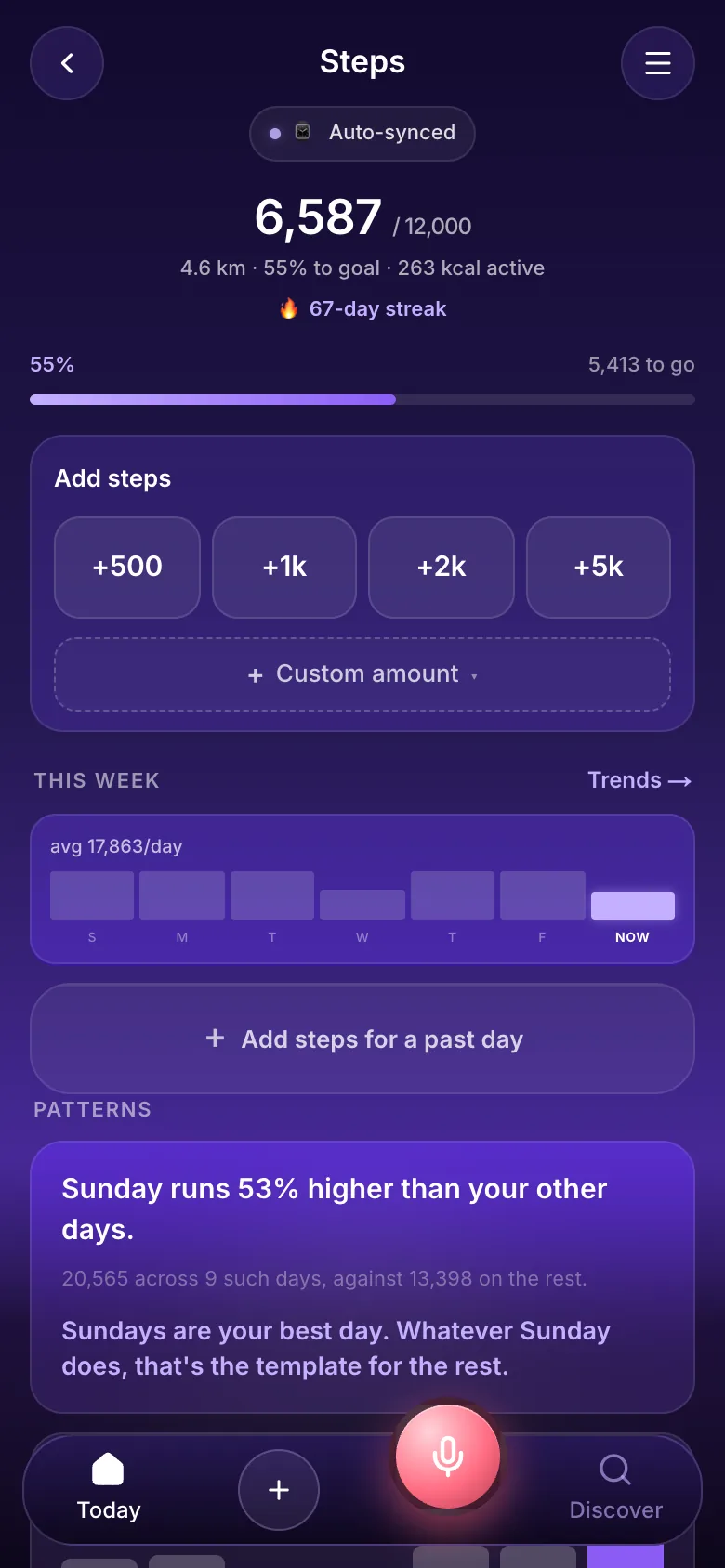
tr8ck works as a standalone pedometer using your phone's built-in motion sensor — no wearable required. You can also sync with Apple Health or Google Fit if you prefer to use a device. Steps are then correlated with mood, sleep quality, and calorie intake to show whether more movement actually translates to better wellbeing for you. Last updated: April 2026
Do daily steps help with weight loss on GLP-1 medications?
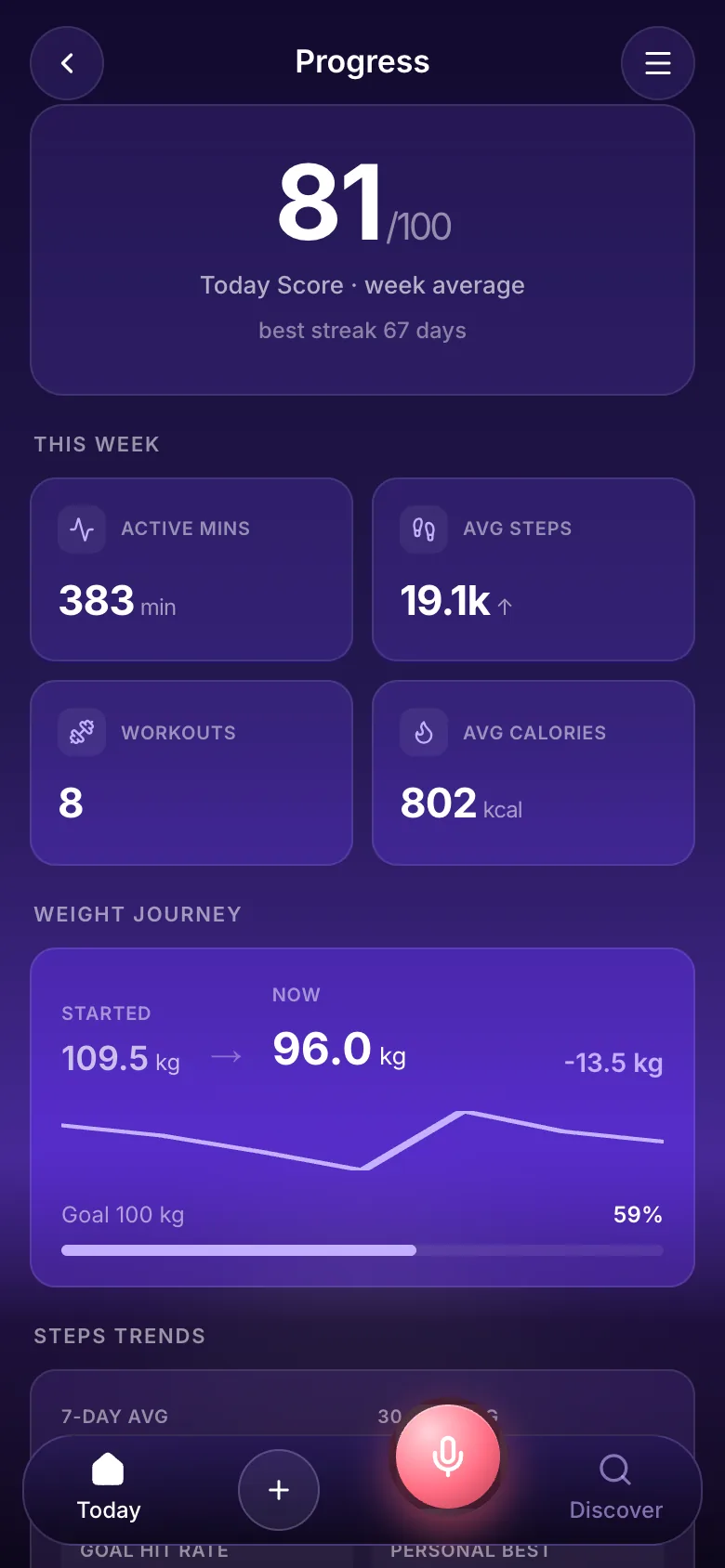
Yes. NEAT (non-exercise activity thermogenesis — daily movement including steps) accounts for 15–30% of total daily energy expenditure and is often suppressed on GLP-1 medications as fatigue increases. tr8ck tracks your daily step count alongside GLP-1 dose levels and weight to reveal how much your movement affects overall outcomes. Last updated: April 2026
How do daily steps affect energy and mood?
Regular walking is one of the most evidence-backed mood and energy boosters. tr8ck correlates your daily step count with mood scores and self-reported energy levels, typically surfacing a clear threshold within 2 weeks of tracking. Most users find a specific step count (often 6,000–8,000) where mood scores meaningfully improve — providing a personalized movement target that is actually achievable. Last updated: April 2026
Is walking during a fast a good idea?
For most people, fasted walking is excellent — it can accelerate fat burning and is generally low enough intensity not to trigger muscle breakdown. tr8ck's Fasting module timestamps your eating windows while Steps tracks activity, letting the AI detect whether fasted walks correlate with better energy or earlier hunger breaks for your specific physiology. Last updated: April 2026